
A hands-on options curriculum covering real trading concepts. Read the lessons, work through examples, and test your knowledge.
OVERALL ACADEMY PROGRESS
Free Lesson
Every lesson is free to read. Subscribe to add Signal Desk, progress tracking, PDF downloads and the lesson tutor.
Lesson 1: 9.0: Introduction to Market Structure
Understand the core philosophy of market structure, order book mechanics, and why structural highs and lows form.
1. The Core Philosophy of Structure
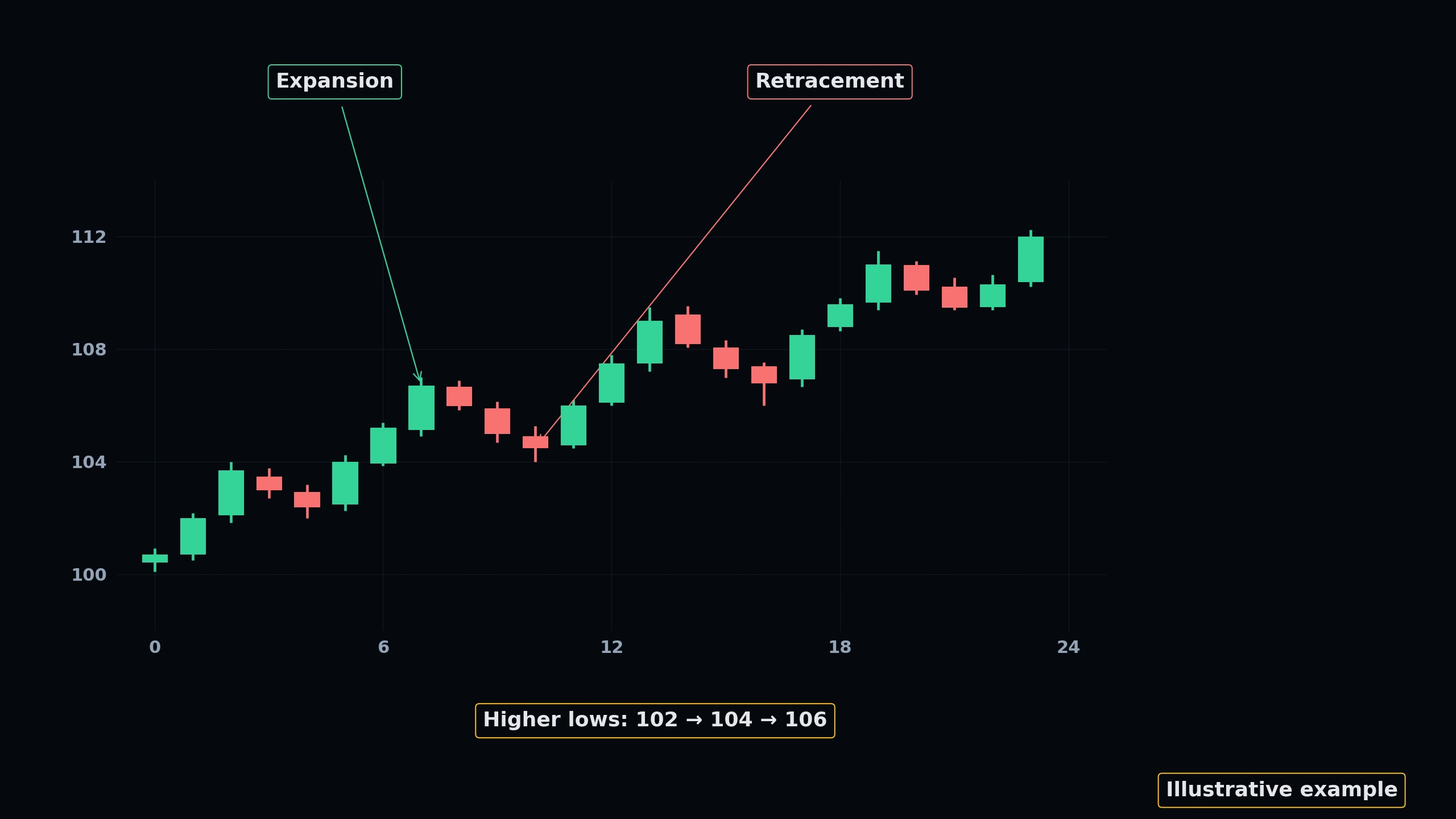
The market moves in a series of directional expansions and corrective retracements. Understanding market structure is the baseline requirement for mapping the footprint of larger financial institutions and central banks.
By analyzing where structure breaks and where it holds, you can transition from speculative guessing to systematically identifying where institutional capital is being committed.
★ Key Concept: Markets are fractal. This means that structural patterns repeat across every single timeframe, from the 1-minute chart to the monthly chart.
2. Why Structure Forms
Sovereign transactions and massive commercial order flow create imbalances in supply and demand. When institutional buyers aggressively consume all available selling liquidity, prices are forced upward, creating a swing high.
When they stop buying and begin securing profits, prices pull back, leaving behind a structural footprint. Identifying these pivot points lets you trade in alignment with real market drivers.
 Click to enlarge
KNOWLEDGE RECONNAISSANCE
What represents the primary driver behind the formation of market structure?
What does it mean that market structure is 'fractal'?
More lessons in this module
- 9.1: Swing Highs & Swing Lows
- 9.2: Break of Structure (BOS)
- 9.3: Change of Character (CHoCH)
- 9.4: Understanding Market Liquidity Pools
- 9.5: Internal vs External Structure
- 9.6: Premium vs. Discount Pricing
- 9.7: Fair Value Gaps (FVG) & Imbalances
- 9.8: Putting It Together: The Market Structure Blueprint
Signal Desk is where you practice this on real stocks: real option chains (about 15 minutes delayed), the Trade Check and a paper-trading account that risks no real money. Join to add it, your progress tracking and PDF downloads.