
A hands-on options curriculum covering real trading concepts. Read the lessons, work through examples, and test your knowledge.
OVERALL ACADEMY PROGRESS
Free Lesson
Every lesson is free to read. Subscribe to add Signal Desk, progress tracking, PDF downloads and the lesson tutor.
Key terms in this lesson
Lesson 5: 9.4: Understanding Market Liquidity Pools
Locate internal and external liquidity pools where institutions seek execution counters.
1. The Concept of Liquidity Pools
Large financial institutions trade in massive block sizes. To buy or sell millions of shares without massive slippage, they require an equal volume of counterparties on the other side of their trades.
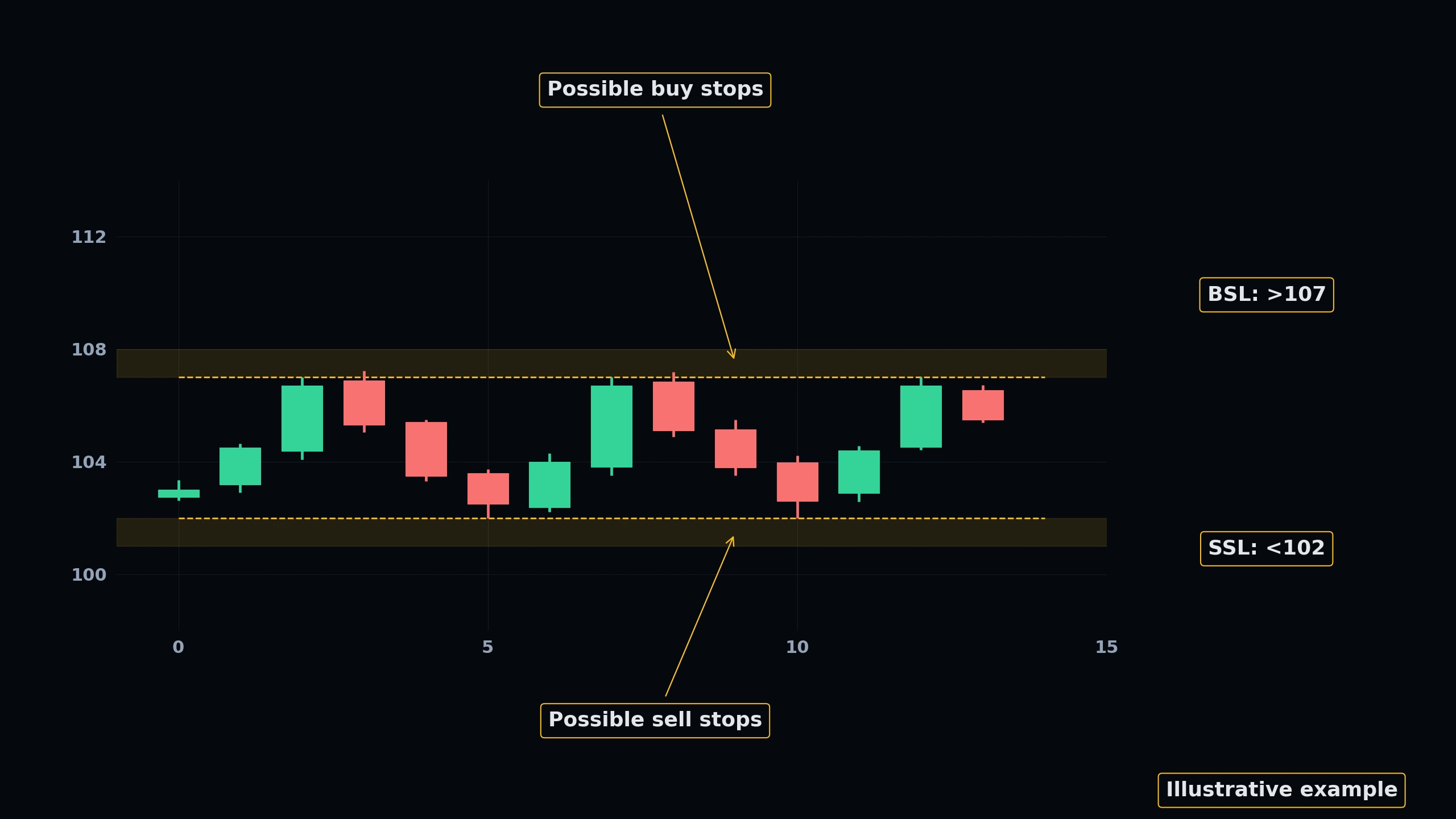
These counterparties are found in Liquidity Pools—areas on a chart where retail stop-losses and breakout orders are heavily concentrated.
• Buy-Side Liquidity (BSL): Located above major swing highs. This is where short-sellers place their stop-buy orders and breakout buyers place buy-stop entries.
• Sell-Side Liquidity (SSL): Located below major swing lows. This is where long traders place sell-stop orders and breakout short-sellers place sell-stop entries.
2. Liquidity Sweeps and Stop Hunts
Because institutions need this liquidity, they will deliberately drive prices into these pools to trigger the stops. This creates a surge of market orders, allowing the institutions to fill their large positions.
Once the stops are swept, price rapidly reverses, leaving behind a long wick. Understanding this footprint allows you to avoid being hunted and instead trade alongside the institutions.
 Click to enlarge
KNOWLEDGE RECONNAISSANCE
Why do institutions target Liquidity Pools located above swing highs and below swing lows?
More lessons in this module
- 9.0: Introduction to Market Structure
- 9.1: Swing Highs & Swing Lows
- 9.2: Break of Structure (BOS)
- 9.3: Change of Character (CHoCH)
- 9.5: Internal vs External Structure
- 9.6: Premium vs. Discount Pricing
- 9.7: Fair Value Gaps (FVG) & Imbalances
- 9.8: Putting It Together: The Market Structure Blueprint
Signal Desk is where you practice this on real stocks: real option chains (about 15 minutes delayed), the Trade Check and a paper-trading account that risks no real money. Join to add it, your progress tracking and PDF downloads.