
A hands-on options curriculum covering real trading concepts. Read the lessons, work through examples, and test your knowledge.
OVERALL ACADEMY PROGRESS
Free Lesson
Every lesson is free to read. Subscribe to add Signal Desk, progress tracking, PDF downloads and the lesson tutor.
Key terms in this lesson
Lesson 7: 9.6: Premium vs. Discount Pricing
Calculate structural equilibrium to buy only in discount zones and sell in premium zones.
1. Defining the Trading Range
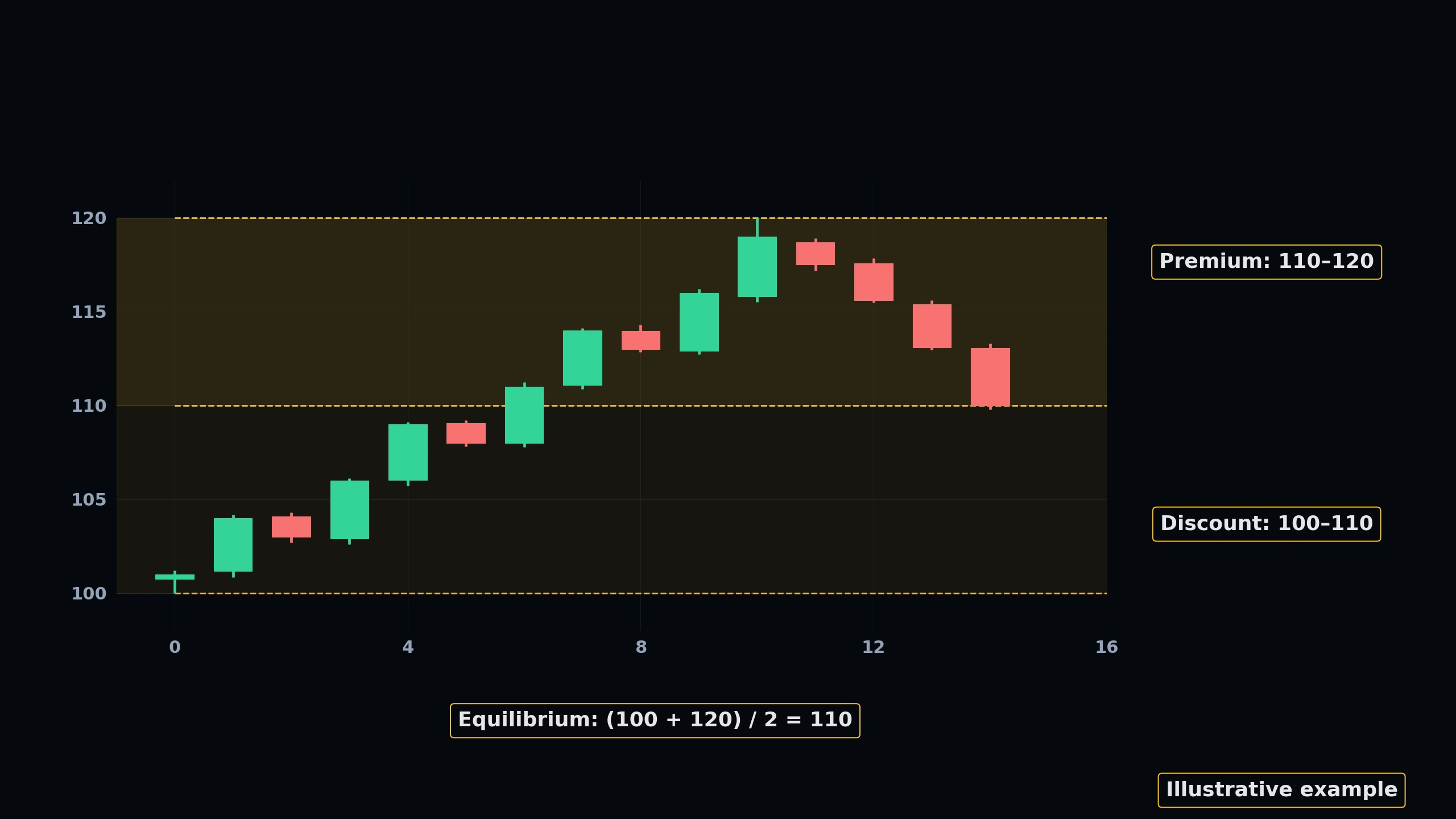
Once a new swing high and swing low are established, we have a defined trading range. To maximize edge, we must evaluate where price is trading relative to this range.
We split the range exactly in half at the 50% retracement level, known as Equilibrium:
• Premium Zone: The upper 50% of the range. Prices are considered expensive (premium).
• Discount Zone: The lower 50% of the range. Prices are considered cheap (discount).
★ Trading Mandate: Never buy in a Premium zone, and never short in a Discount zone.
2. Institutional Order Flow Alignment
Institutions are professional risk managers. Like any business, they seek to buy inventory at wholesale prices (Discount) and sell it at retail prices (Premium).
By restricting your long entries exclusively to the Discount zone of your external trading range, you align your capital directly with institutional behavior.
 Click to enlarge
KNOWLEDGE RECONNAISSANCE
What is Equilibrium within a structural trading range?
More lessons in this module
- 9.0: Introduction to Market Structure
- 9.1: Swing Highs & Swing Lows
- 9.2: Break of Structure (BOS)
- 9.3: Change of Character (CHoCH)
- 9.4: Understanding Market Liquidity Pools
- 9.5: Internal vs External Structure
- 9.7: Fair Value Gaps (FVG) & Imbalances
- 9.8: Putting It Together: The Market Structure Blueprint
Signal Desk is where you practice this on real stocks: real option chains (about 15 minutes delayed), the Trade Check and a paper-trading account that risks no real money. Join to add it, your progress tracking and PDF downloads.