
A hands-on options curriculum covering real trading concepts. Read the lessons, work through examples, and test your knowledge.
OVERALL ACADEMY PROGRESS
Free Lesson
Every lesson is free to read. Subscribe to add Signal Desk, progress tracking, PDF downloads and the lesson tutor.
Lesson 9: 10.8: Constructing an Auction Market Framework
Synthesize Market Profile and Volume Profile concepts into a structured analysis model.
1. Market Profile vs. Volume Profile
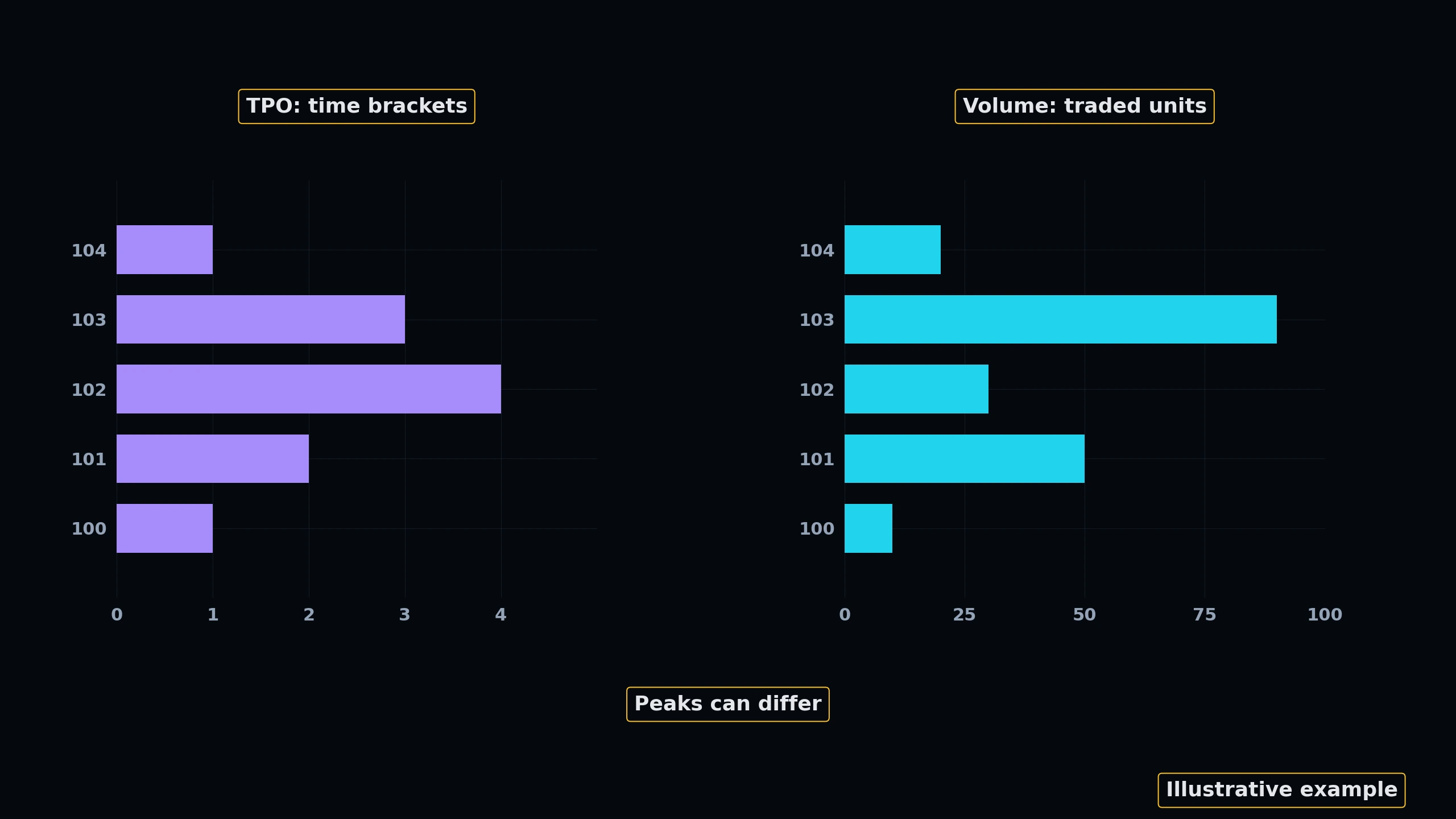
To build a professional AMT framework, we must synthesize the two primary profiling tools:
• Market Profile (TPO): Organizes data based on Time and Price. It displays Time Price Opportunities (TPOs), showing how long price spent at specific levels. It is highly accurate for identifying structural symmetry and daily shapes.
• Volume Profile: Organizes data strictly based on Volume at Price. It displays the exact amount of capital executed at each price level, making it the ultimate tool for locating real institutional support and resistance.
2. High Volume Nodes vs. Low Volume Nodes
• High Volume Nodes (HVNs): Peaks in the volume profile where massive trading occurred. They represent strong agreement of value and act as sticky 'value magnets' that slow down price action.
• Low Volume Nodes (LVNs): Valleys in the profile where almost no trading occurred. They represent complete disagreement of value. Price will shoot through LVNs extremely fast, acting as structural slipways.
 Click to enlarge
KNOWLEDGE RECONNAISSANCE
How does a High Volume Node (HVN) behave when price approaches it?
More lessons in this module
- 10.0: Introduction to Auction Market Theory
- 10.1: The Continuous Auction Process
- 10.2: Price Discovery and Valuation
- 10.3: Balance vs. Imbalance
- 10.4: Defining the Value Area (VAH, VAL, POC)
- 10.5: Understanding Market Excess & Rejection
- 10.6: Initiative vs. Responsive Activity
- 10.7: Market Acceptance vs. Rejection
- 10.9: Practical Application: Profile Playbook
- 10.10: Summary & Auction Mastery
Signal Desk is where you practice this on real stocks: real option chains (about 15 minutes delayed), the Trade Check and a paper-trading account that risks no real money. Join to add it, your progress tracking and PDF downloads.