
A hands-on options curriculum covering real trading concepts. Read the lessons, work through examples, and test your knowledge.
OVERALL ACADEMY PROGRESS
Free Lesson
Every lesson is free to read. Subscribe to add Signal Desk, progress tracking, PDF downloads and the lesson tutor.
Lesson 3: 14.3: Co-Location & Microwave Transmission Networks
Understand data center co-location, laser and microwave line-of-sight communication, and the speed-of-light race.
1. Proximity & Co-Location
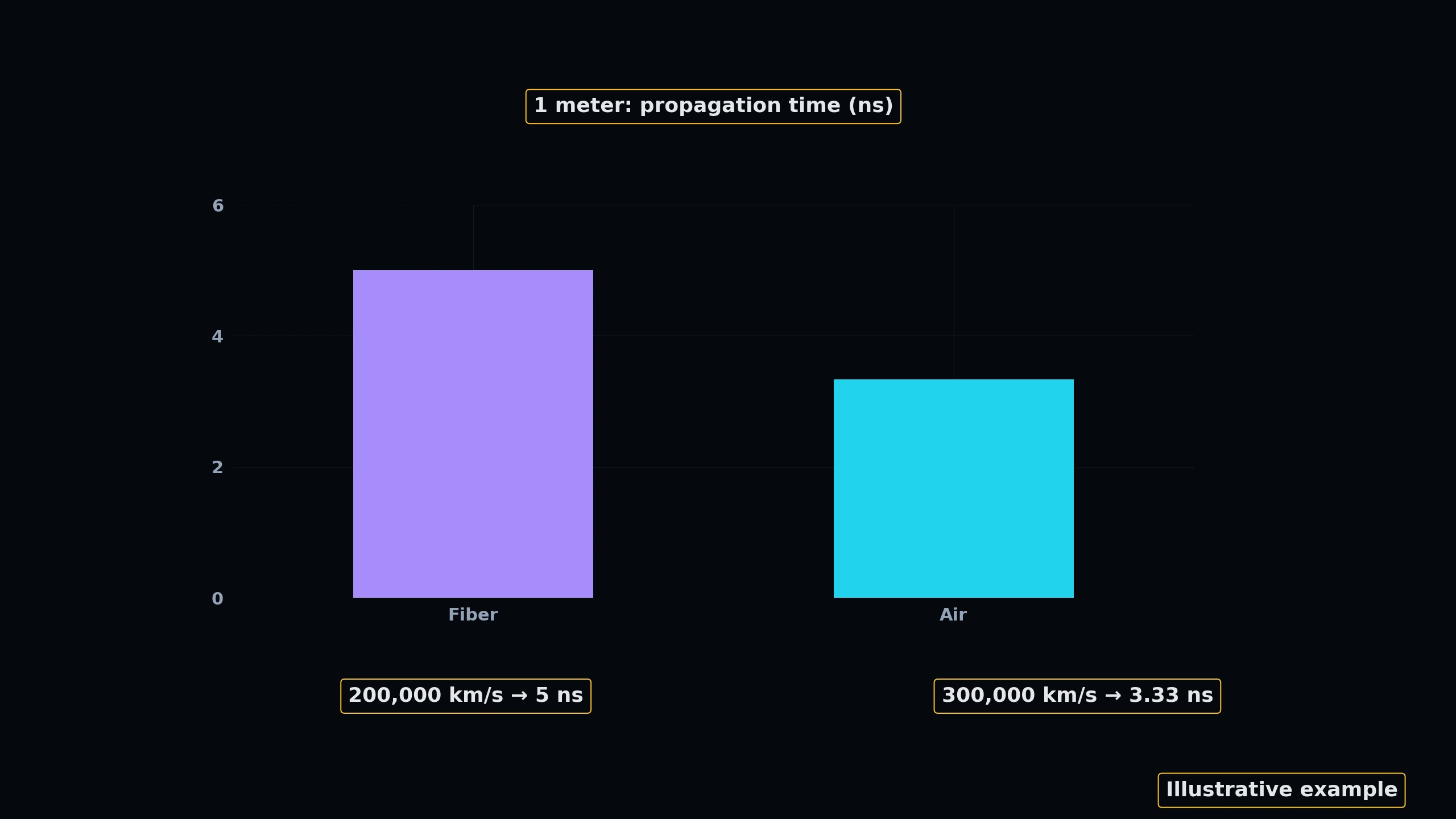
Light travels through optical fiber at approximately 200,000 kilometers per second, meaning every meter of fiber adds ~5 nanoseconds of latency.
To minimize distance, HFT firms rent server racks directly inside the exchange data centers (e.g., Equinix NY4 in Secaucus, NJ or Carteret, NJ). Exchange operators guarantee equal fiber cable lengths to all co-located racks to ensure fairness.
★ Microwave vs. Fiber: Microwaves travel through air at nearly the speed of light in a vacuum (~300,000 km/s), making microwave networks ~30% faster than underground fiber optic cables between distant exchange hubs.
2. Trans-Atlantic & Hollow-Core Fiber
Firms invest millions in building line-of-sight microwave towers and specialized hollow-core fiber optics between financial centers (e.g., Chicago to New York, London to Frankfurt) to gain a microsecond speed advantage over competitors.
 Click to enlarge
GEX Heatmap & Dealer Hedging Profile
The Gamma Exposure (GEX) profile dictates the hedging loops of market-makers. Slide the price pointer below to see how institutional hedging flows suppress volatility or trigger cascading market trends.
Price Controller
Gamma Transition Zone (Near $100): Resting near the Volatility Flip Line. Dealer hedging is transitioning, making the price range choppy as dealer flows oscillate. Expect choppy intraday price ranges.
KNOWLEDGE RECONNAISSANCE
Why do HFT firms utilize microwave transmission networks rather than traditional fiber optic cables between trading hubs?
More lessons in this module
- 14.0: Introduction to High-Frequency Trading (HFT)
- 14.1: Microsecond Hardware, FPGAs & Kernel Bypass
- 14.2: Exchange Matching Engines & Order Gateways
- 14.4: Market Making Algorithms & Inventory Risk
- 14.5: Latency Arbitrage & Cross-Venue Arbitrage
- 14.6: Dark Pools, Internalization & Payment for Order Flow (PFOF)
- 14.7: HFT Risk Controls, Circuit Breakers & Kill Switches
- 14.8: Analyzing HFT Impact on Market Quality & Liquidity
Signal Desk is where you practice this on real stocks: real option chains (about 15 minutes delayed), the Trade Check and a paper-trading account that risks no real money. Join to add it, your progress tracking and PDF downloads.