
A hands-on options curriculum covering real trading concepts. Read the lessons, work through examples, and test your knowledge.
OVERALL ACADEMY PROGRESS
Free Lesson
Every lesson is free to read. Subscribe to add Signal Desk, progress tracking, PDF downloads and the lesson tutor.
Lesson 2: 16.2: VWAP Engineering & Tracking Error
Deconstruct Volume-Weighted Average Price algorithms, U-shaped intraday volume profiles, and tracking error.
1. VWAP Mathematical Mechanics
Volume-Weighted Average Price (VWAP) represents the ratio of total dollar value traded to total volume traded over a given timeframe.
Institutional VWAP algorithms slice parent orders proportionately to historical intraday volume curves—trading heavily during the market open and close (U-shaped profile) and lightly during midday lull.
★ Tracking Error: The variance between the algorithm's average execution price and the official market VWAP benchmark.
2. Dynamic VWAP Adjustments
If actual real-time volume diverges significantly from historical expectations (e.g., on news announcements), dynamic VWAP algorithms adjust child order sizing to stay aligned with live volume distribution.
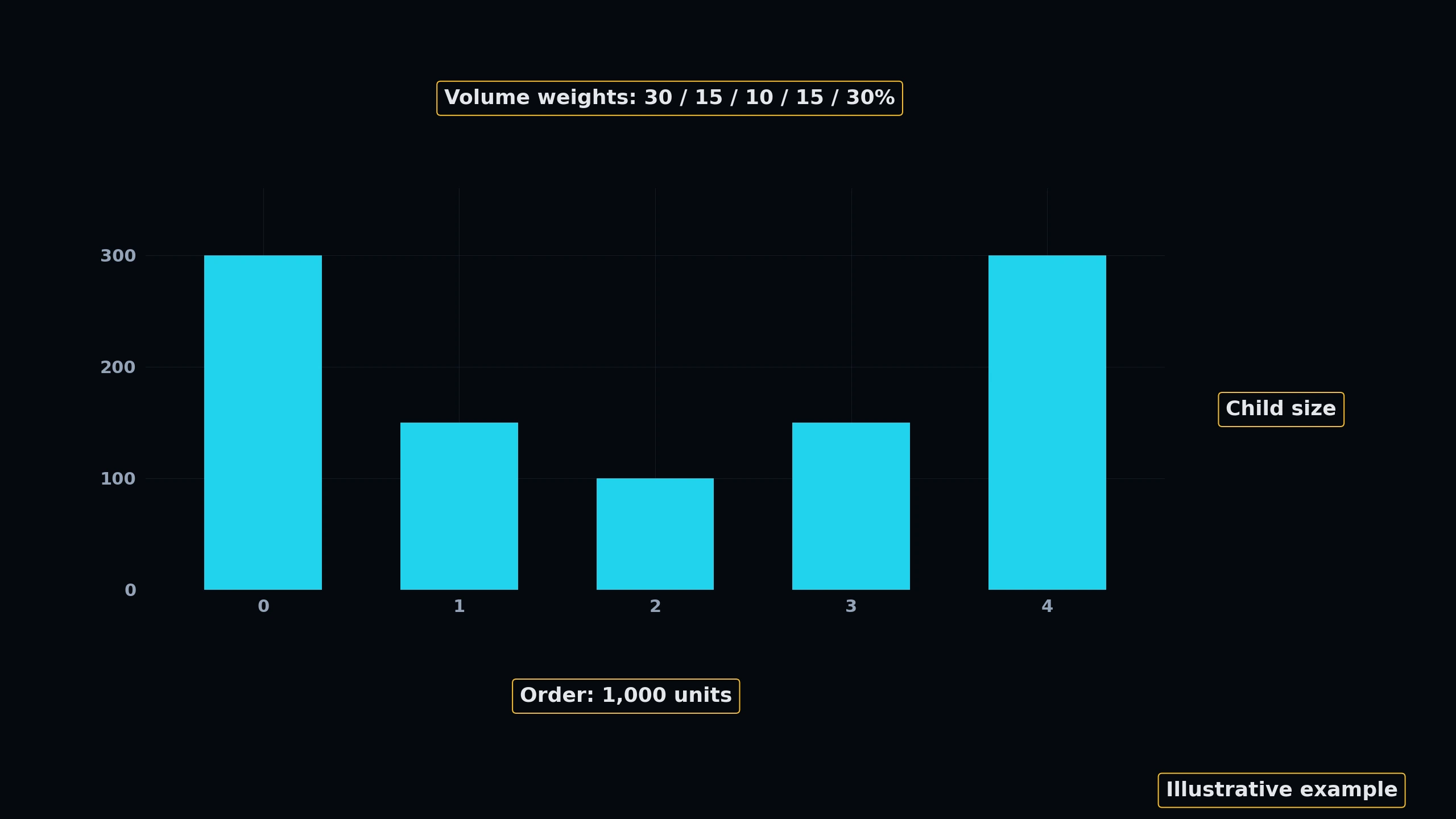 Click to enlarge
Options Structure Exploration
Options are contracts cleared in the bid-ask auction market. Interact with the Order Book below to understand how buy offers (bids) and sell offers (asks) intersect, and inspect the structural breakdown between Call and Put contracts.
Limit Order Book & Spread Interface
Hover over ASK or BID to dissect the auction market dynamics.
Right to Buy
- Outlook: Bullish (Goes up)
- Risk: Capped to premium paid
- Profit: Scales as stock surges
Right to Sell
- Outlook: Bearish (Goes down)
- Risk: Capped to premium paid
- Profit: Scales as stock falls
KNOWLEDGE RECONNAISSANCE
Why do VWAP execution algorithms execute a higher proportion of child orders during the first and last hours of the trading session?
More lessons in this module
- 16.0: Overview of Institutional Algorithmic Execution Strategies
- 16.1: TWAP & Volume Trajectory Algorithms
- 16.3: Implementation Shortfall & Arrival Price Algorithms
- 16.4: Smart Order Routing Architecture & Exchange Fee Schedules
- 16.5: Dark Pool Aggregation & Anti-Gaming Execution Tactics
- 16.6: Market Impact Models & Transaction Cost Analysis (TCA)
- 16.7: Dynamic Adaptive Algorithms
- 16.8: Institutional TCA Reporting & Execution Optimization
Signal Desk is where you practice this on real stocks: real option chains (about 15 minutes delayed), the Trade Check and a paper-trading account that risks no real money. Join to add it, your progress tracking and PDF downloads.